

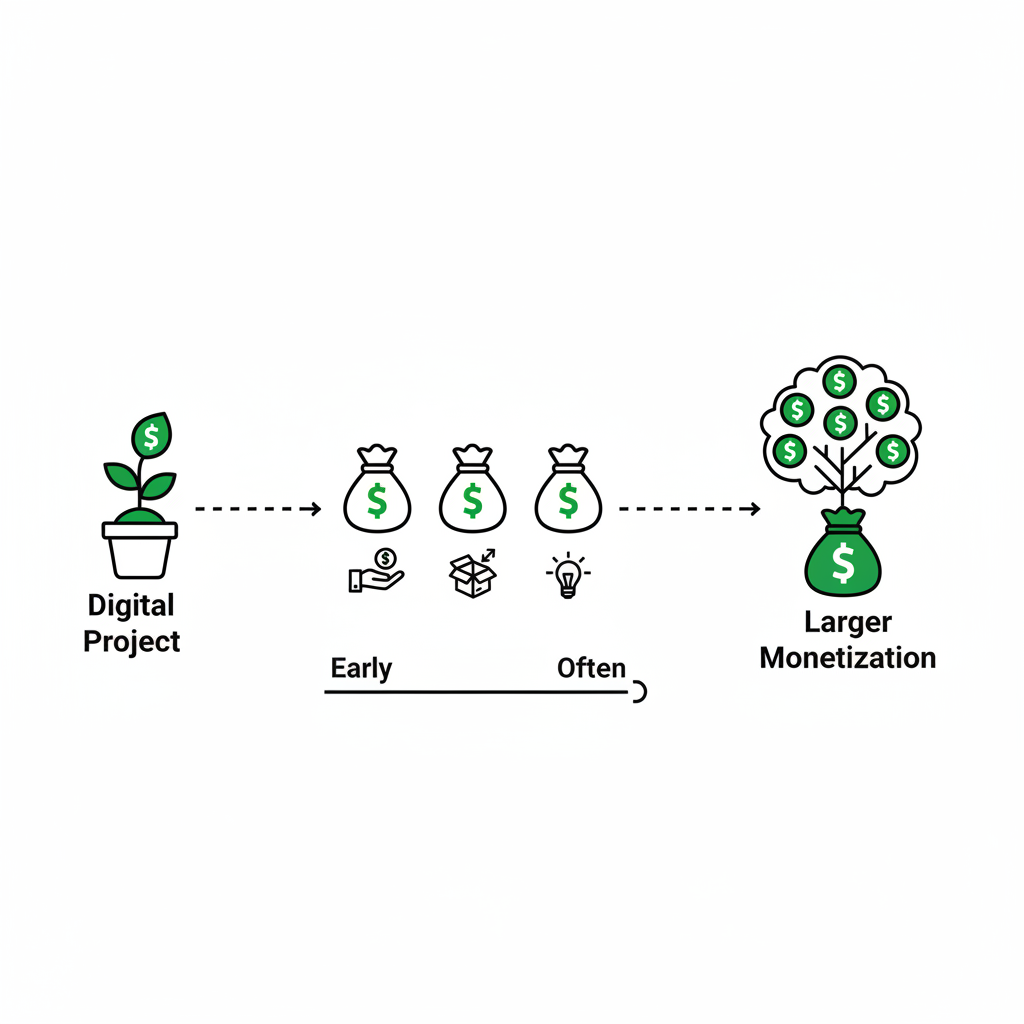
Many entrepreneurs dream of building a digital product that becomes a runaway success, only to face the reality of slow growth or market indifference. But what if you didn't have to wait for massive scale to see returns? Micro-exits offer a powerful alternative: monetizing your digital projects early, validating your ideas, and generating revenue without needing a huge audience or extensive development.
Think of a micro-exit not as selling your entire business, but as strategically cashing in on early traction, testing the market, and de-risking your venture. Here’s how to implement these tactics for your digital projects:
1. Launch a Minimum Viable Product (MVP)
Before investing heavily in full-scale development, create the simplest version of your product that delivers core value. This could be a short guide, a mini-course, a basic template, or a single feature.
- Purpose: Validate demand, gather user feedback, and understand what resonates with your target audience.
- Example: Instead of a comprehensive online course, offer a single, in-depth module or a downloadable workbook.
2. Leverage Pre-Sales
Build anticipation and confirm interest by offering your product before it's fully complete. Early-bird discounts create urgency and provide valuable capital and feedback.
- How-to: Announce your upcoming product, outline its benefits, and offer a significant discount for customers who purchase upfront.
- Benefit: This confirms market demand and provides funds to complete development.
3. Partner with Micro-Influencers and Niche Creators
Forget chasing massive influencers. Micro-influencers, with their highly engaged, niche audiences, can provide authentic promotion and quick reach.
- Strategy: Identify creators whose followers align perfectly with your ideal customer. Offer them early access, a commission, or a free product in exchange for a review or promotion.
- Why it works: Their recommendations carry more weight within their specific community.
4. Implement Post-Purchase Upsells
Once a customer has decided to buy, they are often more open to purchasing complementary products or services.
- Tactic: Immediately after a customer completes their initial purchase, present them with a relevant, high-value upsell offer.
- Example: If someone buys a digital planner, upsell them a set of digital stickers or a related productivity template.
5. Bundle Products or Create Starter Versions
Increase perceived value and test sales channels efficiently by bundling related items or offering a scaled-down "starter" version of a more complex product.
- Bundling: Combine multiple digital assets (e.g., a pack of social media templates, an ebook, and a short video tutorial) at a discount.
- Starter Versions: Offer a basic, lower-priced version of a premium product to attract a wider audience.
6. Utilize Short-Form Content and Micro-Moments
Platforms like TikTok, Instagram Reels, and YouTube Shorts are ideal for rapid engagement and social commerce.
- Content: Create quick, valuable, and shareable content that highlights a problem your product solves or showcases its benefits.
- Commerce: Integrate shoppable links directly into your short-form videos to drive immediate conversions.
7. Sell on Flexible Platforms or Marketplaces
Choose platforms that allow for quick setup and support urgency-driven campaigns.
- Options: Consider marketplaces like Etsy (for creative assets), Gumroad, or specialized platforms for courses and digital downloads.
- Benefit: These platforms often handle payment processing and delivery, allowing you to focus on marketing and sales.
8. Analyze Competition and Drive External Traffic
Look at what competitors are doing, identify gaps, and drive traffic from external communities.
- Competitive Analysis: Understand their offerings, pricing, and marketing. Can you offer something better, more niche, or at a different price point?
- Community Engagement: Participate in relevant online forums, subreddits, or Facebook groups (where allowed) to share your expertise and subtly introduce your project.
By adopting these micro-exit strategies, you can transform your digital projects from potential long-term gambles into immediate revenue generators and validated business ideas. Start small, test, and iterate your way to success.
Sources
- How to Sell Digital Products in 2025 with Proven Strategies - Creaitz
- Blink and You'll Miss It: The Rise of Micro-Moments in 2025 - Farfetched Studios
- Top 10 Digital Marketing Strategies for 2025 - AMA
- 8 Proven Strategies to Promote Your Digital Products in 2025 - Graphy
- 23 Digital Products to Sell Online in 2025 (+ Marketing Tips) - Xperiencify